
State of the Browser 2026
It's easy to feel like you’re falling behind. Conferences are one of the few times I deliberately slow down and take it all in. It’s been a hot minute since my last in-person conference, so it was great to finally make it to this year’s State of the Browser.
State of the Browser is a one day, single track conference organised by London Web Standards. It's clear it is run by a group of people passionate about the state of the web, and who are keen to inspire the next set of people to care about its future. It's accessible, affordable and held right in the centre of London. What more could you ask for?
This year there were some absolutely cracking talks from right across the web - past, present and future. Every single one of them was a mine of information. We covered a wide range of topics from anchor positioning to GSAP. There was even a talk about balancing client demands with the limitations of a Nokia feature phone. In the nicest way, I hope I never need to call on that one...
Rather than trying to cover everything, I wanted to highlight three talks that stuck with me the most.
The Art of Connection
Fiona Safari shared her struggles as an introvert developing a career where staying quiet has negative consequences. How can you thrive if your body senses others as a threat?
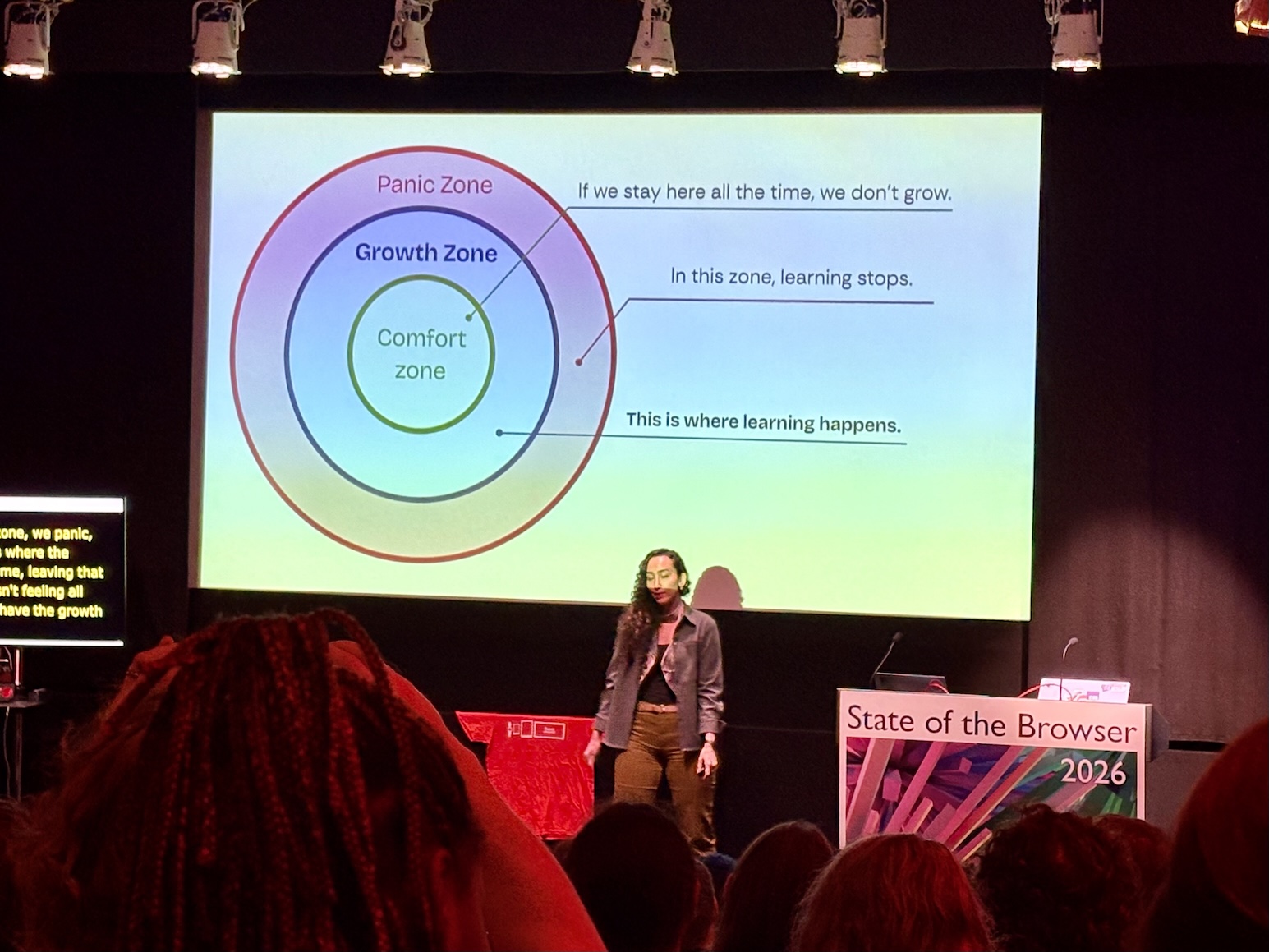
While not strictly a talk about the browser, I don't think it's an unfair judgement to say that a lot of the people in that space are introverts - myself well and truly one of them. Her talk was full of actionable tips and personal insights on how she's come to approach the environments that once filled her with fear. It boils down to routinely pushing out of your comfort zone in managed ways, and only paying attention to the thoughts you have evidence for.
In the end, it doesn't matter what other people think of me. The important thing to consider is the story we keep telling ourselves.
The Plateau of Accessibility Compliance
Chad Gowler gave us a stark reminder that just because a site meets guidelines for accessibility compliance, it doesn't mean it's accessible.
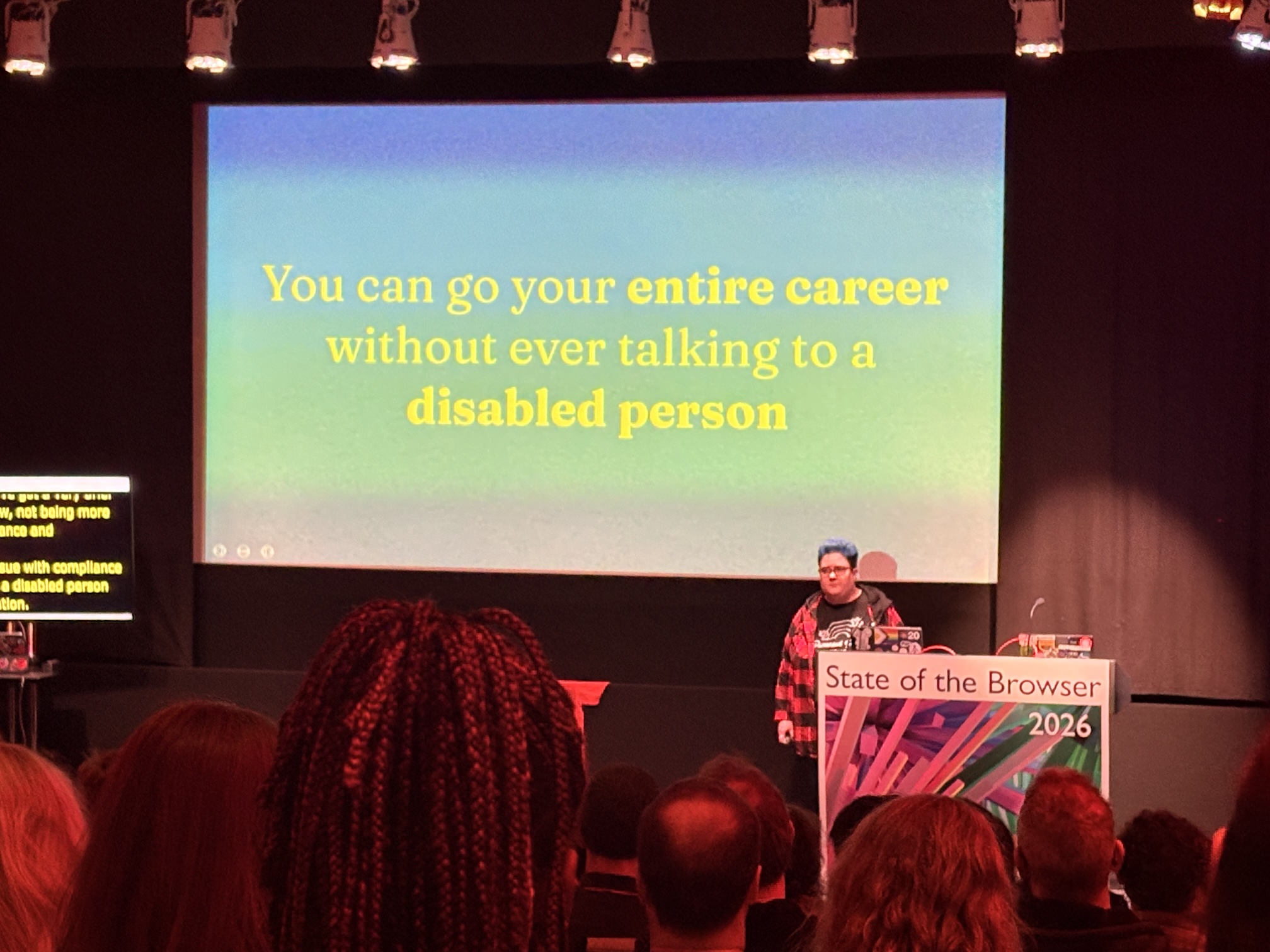
People consider the web to be getting less accessible over time. Why is that? Is the web more complicated now? But surely the technology we have means it's easier than ever to identify and solve problems? Chad walked us through WCAG compliance and how easy it is to make an inaccessible site when it becomes a box-ticking exercise. The solution? Re-centre accessibility. See those struggling to use your site in context. Build yourself better guidelines for your user's needs.
It was really useful to see the comparison on how the games industry meets the needs of such a wide range of people. Affordances range from a simple slider for caption sizes to seven different levels of spider detail to help those with arachnophobia. Helping people doesn't mean making it easy for everyone, just allow people to customise how they want to use the product.
14% of disabled gamers have bought a game they couldn't play and couldn't get refunds for due to restrictive refund policies. If you tell people what they can and can't do in your game they know whether or not to buy your game. The same goes for accessibility settings on your website - let people know what they can and can't do.
Temporal: It's About Time
Jason Williams gave us a brief history of time with his work on the Temporal specification in JavaScript.
It's hard to find a developer who hasn't been bitten by a timezone issue in the past. JavaScript's Date object is packed full of gotchas ready to trip up the next unwitting front end developer. The Temporal object is the replacement for all things date-related - covering all the niches like timezone conversion, offsets and formatting.
As of right now, Temporal is at Stage 4 of the standards process and is making its way into browsers. Jason walked us through the seven years of pain it took to get to that point, why it's a problem that needed solving, and all the wonderful things it can do.
I'm very thankful that Jason broke down all the different features of this. It's so easy to dismiss so much of the complexity hidden behind an object call, such as the difference between plain time and zoned time.
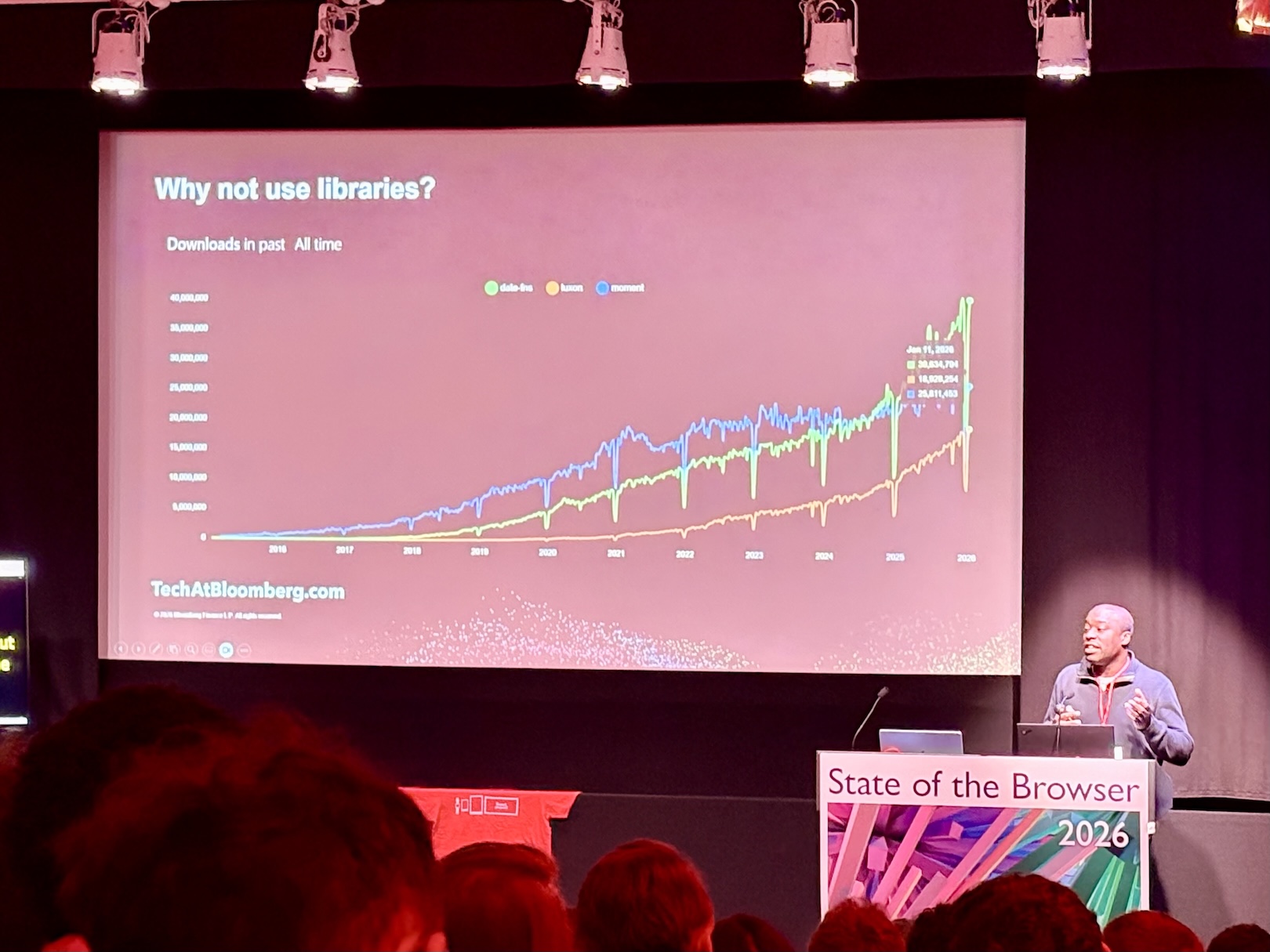
One thing I have had to battle with is the sheer size of the packages that fix this. Timezones are wild, and that size is absolutely worth the payoff of having to handle that yourself. It's a cost users end up paying time and again on every site they visit. It's a great candidate to be browser-native.
[Moment.js] is 270KB GZipped. That's bigger than the average entire response of a website up to 2017.
Final thoughts
With a variety of talks on display, it's difficult to draw a theme across all of them. But it was a reminder the web isn't about the technology - it's about the people that use it. Whether it's how we connect, who we design for or how we solve their problems, the best work comes from understanding the humans on the other side.
All of the talks from the day are slowly making their way onto YouTube, starting with Jason's talk. In short, every single one of them is worth your time. They're all lovely.
If you get the chance to go next year - do. Events like this are rare these days and we should support them as much as we can.
There's zero talk about AI as well. It's worth it just as a palette cleanser.