13.1 tips from my first half marathon
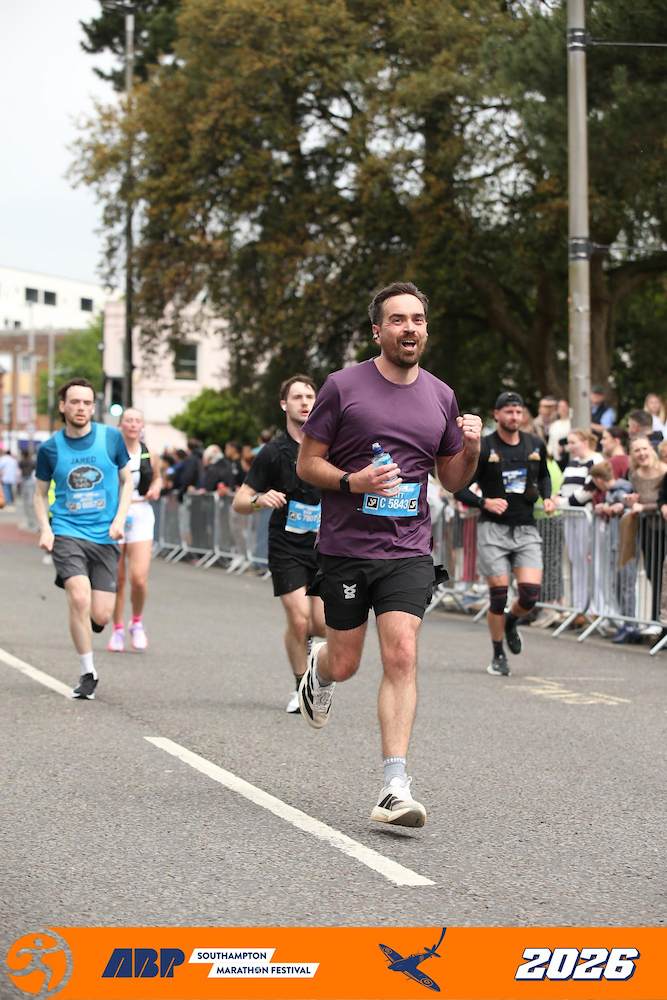
This weekend I ran my first half marathon. I completed the Southampton Half in just under 1:55. I was aiming for sub-2, so I'm made up. Sebastian Sawe has nothing to worry about, but I'm happy.
But the thing is - this was my first half marathon. I'd only ever run the distance once before generally, so I had no idea how it would go. Most of the things you hear online are from the experts, so here are the 13(.1) quick tips that helped me prepare as best I can for race day.
1. Get a training plan
Can you run for a bit already? That's great. A half marathon is just a lot of bits of running stuck together without stopping.
If you need a bit more guidance than that - get a plan together. There's plans available for all sorts of skill levels, but if you've not run at all you might be better off starting with a smaller goal like 5K or 10K first.
If you're ready, there's plenty of free and easily accessible training plans out there. As well as being superb resources generally, I'd recommend the plans either from The Running Channel or Ben Parkes as great places to start. There's apps like Runna too, but I haven't tried those and they don't seem worth the price.
For me, put together my own training plan with AI. It's an extension of the one I built for my first 10K. In that time it's switched from ChatGPT to Claude, but otherwise remains the same. I'm still trying to find the right ways to interact with it, but it's gotten to know me and my routine pretty well at this point.
2. Book a goal race
Nothing's going to motivate you quite like a fire under your arse. A date in the diary is a great way to get you to do the thing you've been putting off doing.
Have you got a favourite city you'd love to run in? Somewhere local where you know the roads, or somewhere abroad and exotic? Get it booked. While running around the back streets of Southampton isn't everybody's dream, I had run the 10K there last year and so knew what to expect.
Once it's booked - learn the course. You might not know the route if it's too far out, but check out previous years for a good idea of what to expect. Even just knowing there's a water station every couple of miles or there's a big hill at the end gives you something you shape your training around.
3. Set a finish goal - loosely
If you've run previous race lengths before, you can use online finish time predictors to get a good idea of what you're capable of.
If you haven't, the best way to do it is to just get out there, give it a try and time it. Run comfortably and don't watch the clock. Keep to a route similar to what you would be running on the day too, as it'll affect the overall time. See what you get at the end of that and aim to better it!
The goal for my race was under 2 hours. It was a largely arbitrary one coming from rounding up on my longest attempt, but it's one that I knew I could achieve. It's now given me a time to beat too, which is ace.
4. Join a Parkrun
I love Parkrun. That's weird for me to say, as it's something I should be cynical and heartless about, but it attracts just some of the best people in every community.
For the uninitiated - Parkrun is a weekly timed 5K run in over 1,400 locations in the UK and abroad every Saturday. It's free to turn up, there's a course planned out for you and there's people cheering you on the whole way. While some take it (very) seriously it's not a race. You can be as fast or as slow as you like - you are only ever racing yourself. You'll never be the last person crossing the finish line.
As it's weekly, it's a great way to build up a running habit. I've got mine pencilled into my training each week. It's a change of scenery and gets me up on the weekends. You'll meet some lovely people there too. It's a great motivator.
5. Celebrate your wins
I'm a numbers guy. Pretty much every bit of exercise I do gets uploaded to my Strava profile even if I never look at it again.
But in that process it will shout out when you hit a personal best, worked harder than normal, or nailed that tricky segment on the last run. It's a good and constant reminder that you're making progress. Even if it's small, make sure you celebrate them.
You don't have to share it publicly, but I find after every Parkrun there's a bunch of people who also ran that day go through and big up the others that ran with them, who in turn pass the love on to others. It's a great motivator even if I have no idea who all these people are. They're celebrating your wins with you and it's lovely.
6. Don't buy those carbon plate shoes
If you're a nerd like me you'll start getting into all the latest gadgets and gimmicks that get you that extra 10 seconds you've been looking for. It's tosh, honestly. Unless you're Mo Farah, you don't need it.
All you really need is a half-decent pair of running shoes that fit your running style. You can often pick up last year's versions for half the price, or find some barely used ones on the likes of Vinted. See how you get on with what you have, as it will help inform what else you should get.
Beyond decent shoes, a few other things made a real difference for me. A smartwatch or fitness tracker is probably the most useful - come for the stats, stay for that sweet Strava kudos. A long-sleeved running top will see you through the colder months, and if your legs are as hairy as mine, you can skip the joggers entirely. Compression shorts with a phone pocket are worth it too - you really don't want anything swinging around out there.
That's not to say you need anything. More that you don't need all the other stuff.
7. Prioritise the week before
It should be fairly obvious that you don't get blind drunk the day before the thing you've been training for. What's not so obvious is what effect your actions even a week before can have.
Make sure to tone down that training plan in the final week. Give it just enough to keep the legs ticking over, but don't try anything big or clever to eke out a slightly better performance on the day. It never works.
Make sure you eat the right things, stay hydrated and get good sleep. You know, like you should be doing anyway.
8. Pin your bib on the night before
These races will send you a little bib in the post that you wear on the day. They've got your name, number and usually a chip they use to track you on the course.
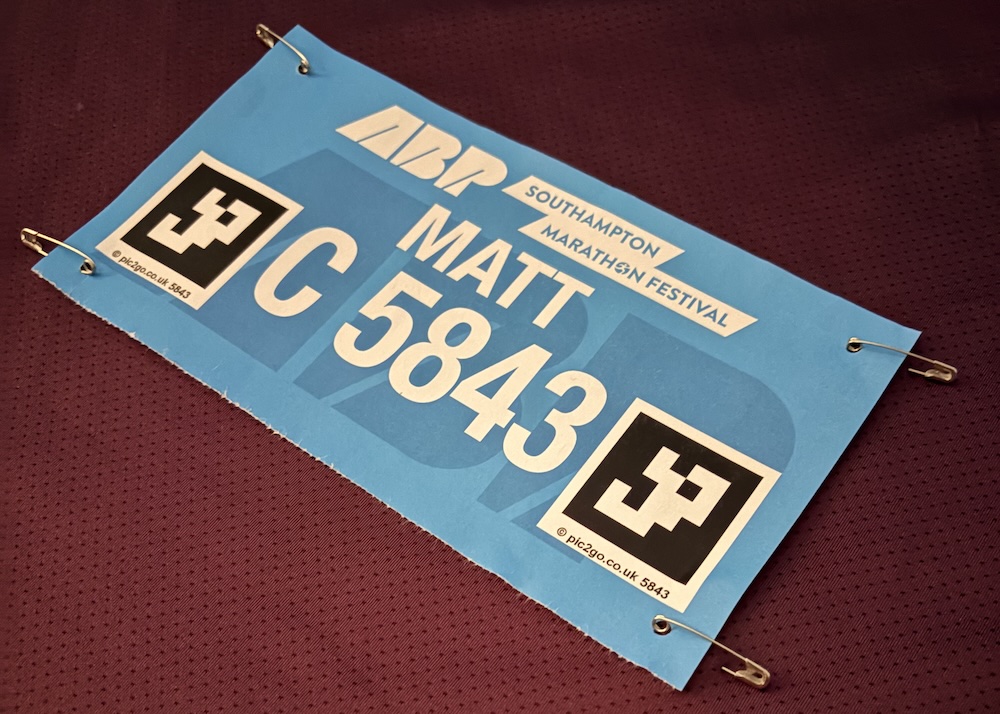
The good events will send you some safety pins with it to pin it on your top, but they don't always. The last thing you want to be doing is scrabbling through that drawer of junk in the kitchen hoping you can find 4 pins.
Get prepped and do it the night before. Heck, just get all the kit laid out ready to go. These things always happen far too early on the weekends. You're just saving yourself a headache, I promise.
9. Don't skip the warmup
You will always see a few guys in wrap-around shades and far too short shorts warning up by the side of the pens as you wait to start the race. They look like tools, but they're setting themselves up in the best possible way. It's time to look like a tool yourself.
It doesn't need to be fancy - or indeed particularly long. I find a light jog, a couple of short sharp sprints, and a megamix of all the sort-of-stretches they made you do at school before PE do the job. Over time you'll find what works for you and what doesn't.
At the start of the race there is almost always some local gym or celebrity that does a group warmup on a stage that's far too far away from you in a place where nobody has the room to stretch properly. While not ideal, it is better than nothing. Plus you won't look like a tit if you're all doing it together.
10. Stick to the race plan
The problem with a half marathon is that it's so damn long. It's got the word people use for things that take a really long time in it, for goodness sake.
That's why it's so important to go into it with a strategy. All that work you've put in over the previous few months is nothing without a bit of race management.
Running a negative split is the ideal. That means the second half of your race was quicker than the first. I get that sounds bonkers - surely you'll slow down as you get tired? But it's been proven time and again that if you keep a little bit back at the start then you'll be quicker overall. It doesn't work for everybody, but it works for most.
After that, you want to be thinking about how you'll fuel your runs. Over time I found the best combo for me was tea and toast 2 hours before and a banana just before. For the longer runs, I'd have an energy gel every 30 minutes or so to keep the energy up.
If it's your first race you won't know what strategy works best for you. Pick one, try it out, and if it doesn't work try a different one next time. It doesn't need to be overly complicated.
11. Always hit the power up signs
Lots of people come out and cheer you on during race day. There are some very creative people out there with some very creative signs. I love all of them - apart from the one warning me of a massive hill I was about to come up against. That one not so much.
My absolute favourites are the ones the kids make. In particular the ones with a star man or super mushroom drawn on them that say "tap here to power up".
You gotta tap that sign, man.
It works and I can't explain why. Whether it's a kid with a sign or them just holding out their hand for a high five as you pass, I've got to go over and thank them for their hard work. Every single one gives me a little boost however bad I feel at the time.
12. Cheer on the strugglers
There's always a few that cooked it too hard. The hard work you've put in has just deserted you as hundreds of people overtake you. Most people have there before and it's not nice.
I try and always give them a quick "you got this" or "almost there" as I pass. Sometimes it's the little motivation they needed to kick off again, and you might have just saved their race.
I admit that being on the other side of that and receiving an "not far now" comment from someone as they blast by can go down poorly so perhaps use your own judgement there. But I'd say on the balance of it, it helps more than it doesn't.
13. Don't stop at the end
As you pass the finish line you've likely been running your heart out for at least the last hour. I get the temptation would be to just... not do that any more. But I can promise you now it's definitely worth walking around a bit for five or so minutes after you've finished.
There's lots of reasons, but mostly it's to stop you seizing up when you try to get going again. It's an easy mistake to make.
13.1 ...until you reach a pub
Of course, most places that will be hosting a half marathon will also have a pub within 5 minutes walk away. Combine your cooldown with a well earned drink - even if that's not strictly in the post-race recovery plan. Call it mental health recovery, I guess?